
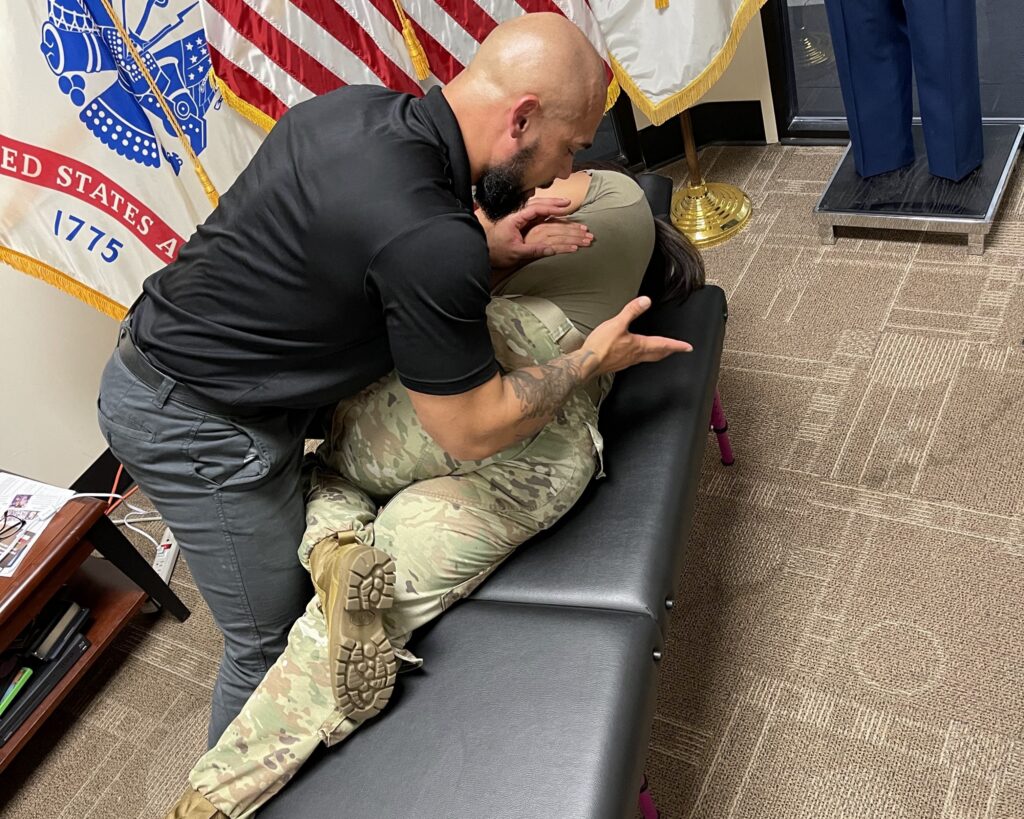
If you’ve been dealing with persistent hip pain, you might be surprised to learn that the real culprit could be located several inches higher — in your spine. Here at Chiro Studio in Cocoa, FL, we see countless patients who come in complaining of hip discomfort, only to discover that addressing spinal alignment and nerve function provides the relief they’ve been searching for. The connection between your spine and hip pain is more common than most people realize, and understanding this relationship can be the key to finding lasting solutions. In this article, we’ll explore five surprising ways your spine might be contributing to your hip pain, and what you can do about it.
What is the spine-hip connection? Your spine and hips work together as part of your body’s kinetic chain, meaning that dysfunction in one area often affects the other. The nerves that control hip function originate in your lower back, and misalignments or irritation in the lumbar spine can refer pain directly to the hip region, creating discomfort that may seem unrelated to spinal issues.
Table of Contents
- Nerve Referral Patterns: When Your Spine Sends Pain to Your Hip
- Postural Compensation: How Spinal Misalignment Changes Your Gait
- The Sacroiliac Joint: The Bridge Between Spine and Hip
- Muscle Imbalances from Spinal Dysfunction
- Disc Problems That Masquerade as Hip Pain
- How Chiropractic Care Addresses the Spine-Hip Connection
- Practical Tips for Supporting Both Spine and Hip Health
- When to See a Chiropractor for Hip Pain
- Myths vs. Facts About Hip and Spine Pain
Nerve Referral Patterns: When Your Spine Sends Pain to Your Hip
One of the most surprising connections between your spine and hip involves something called referred pain. The nerves that exit your lumbar spine (lower back) don’t just stay in your back — they travel down through your pelvis and into your hips, thighs, and legs. When these nerves become irritated or compressed at the spinal level, they can send pain signals to areas far from the actual source of the problem.
The L2, L3, and L4 nerve roots in your lower back specifically innervate the hip region. When vertebrae in this area become misaligned or when surrounding tissues create pressure on these nerves, you may experience pain, numbness, or tingling that feels like it’s coming directly from your hip joint. This is why many of our patients here in Cocoa come in thinking they have a hip problem, when in reality, the issue originates in the spine.
This phenomenon is particularly common with conditions like sciatica, where nerve compression in the lower back creates symptoms that radiate down the leg and can be felt deeply in the hip area. The pain may worsen with certain movements like bending, twisting, or sitting for extended periods — all positions that affect spinal alignment and nerve function.
Understanding this nerve referral pattern is crucial because treating only the hip may provide temporary relief, but it won’t address the underlying spinal dysfunction that’s creating the symptoms. Research indicates that addressing spinal alignment and reducing nerve irritation can significantly improve hip pain that has a neurological origin.
Postural Compensation: How Spinal Misalignment Changes Your Gait
Your body is remarkably adaptable. When something isn’t working properly in one area, other parts will compensate to keep you moving. This compensation pattern becomes particularly evident in the relationship between your spine and hips. When your spine is misaligned — whether from poor posture, injury, or degenerative changes — your body automatically adjusts how you stand, walk, and move.
These postural compensations often place abnormal stress on your hip joints. For example, if you have a spinal misalignment that causes you to favor one side, you’ll naturally shift more weight onto one hip. Over time, this uneven distribution creates excessive wear and tear on that hip joint, leading to inflammation, muscle tension, and pain.
The same principle applies to your gait pattern. When spinal dysfunction alters the way you walk, your hips must work harder to compensate for the lack of normal spinal movement. This increased workload can lead to hip flexor tightness, gluteal muscle weakness, and joint irritation — all of which contribute to hip pain that seems to have no clear cause.
Here in Cocoa, we often see patients who have developed limping patterns or asymmetrical walking mechanics due to long-standing spinal issues. Once we address the spinal alignment and restore normal movement patterns, the hip pain frequently diminishes as the body no longer needs to compensate.
The connection between posture and hip pain is particularly important for people who sit for extended periods or have physically demanding jobs. Poor sitting posture creates both spinal stress and hip flexor tightness, creating a cycle of dysfunction that affects both areas simultaneously.
The Sacroiliac Joint: The Bridge Between Spine and Hip
The sacroiliac (SI) joint is one of the most overlooked yet crucial connections between your spine and hips. Located where your sacrum (the triangular bone at the base of your spine) meets your pelvis, the SI joint acts as a shock absorber and load transfer point between your upper body and legs. When this joint becomes dysfunctional, it creates pain that can be easily mistaken for hip problems.
SI joint dysfunction is remarkably common and can result from various factors including falls, pregnancy, leg length discrepancies, or repetitive stress from activities like running or heavy lifting. The pain typically presents in the lower back, buttock, or hip region, making it difficult to distinguish from true hip joint problems without proper evaluation.
What makes the SI joint particularly relevant to the spine-hip connection is how spinal alignment directly influences SI joint function. When your lumbar spine is misaligned, it creates abnormal forces on the sacrum and pelvis, which in turn affects SI joint mechanics. This creates a domino effect where spinal dysfunction leads to SI joint problems, which then create hip pain and dysfunction.
Many patients at Chiro Studio in Cocoa experience significant relief from hip pain when we address SI joint alignment and mobility. The SI joint responds well to specific chiropractic adjustments that restore normal motion and reduce inflammation. When combined with spinal adjustments, this comprehensive approach addresses the underlying biomechanical dysfunction rather than just treating symptoms.
The SI joint also plays a crucial role in stabilizing your pelvis during movement. When it’s not functioning properly, the muscles around your hip must work overtime to compensate, leading to muscle strain, trigger points, and chronic tension that contributes to hip discomfort.
Muscle Imbalances from Spinal Dysfunction
Your spine and hips share many muscle groups that work together to create stable, coordinated movement. When spinal dysfunction occurs, it disrupts the normal firing patterns and balance of these muscles, creating imbalances that directly affect your hips. This muscular connection is often the missing piece in understanding chronic hip pain.
The psoas muscle provides a perfect example of this connection. This deep hip flexor originates on your lumbar vertebrae and travels down to attach on your femur (thigh bone). When spinal misalignment or nerve irritation affects the lumbar region, the psoas muscle often becomes tight, weak, or dysfunctional. This creates anterior hip pain, reduced range of motion, and difficulty with activities like climbing stairs or getting out of a chair.
Similarly, spinal dysfunction affects the gluteal muscles — your body’s primary hip stabilizers and extensors. When your lower back isn’t moving properly, your glutes often become inhibited or weak, forcing other muscles like the piriformis and tensor fasciae latae to work harder. This compensation pattern creates muscle tension, trigger points, and pain that radiates through the hip and down the leg.
The quadratus lumborum, a muscle that connects your lower ribs to your pelvis and lumbar spine, is another common culprit. When this muscle becomes tight or spasmed due to spinal stress, it creates a pulling sensation on the pelvis that affects hip mechanics and creates discomfort in the hip and lower back region.
Research suggests that addressing spinal alignment and restoring normal nerve function can help reestablish proper muscle balance and coordination. When combined with appropriate therapeutic exercises and stretching, this approach helps break the cycle of compensation and allows the muscles around your hip to function as they should.
Disc Problems That Masquerade as Hip Pain
Intervertebral disc issues in your lower back are surprisingly common sources of hip pain. The discs in your lumbar spine act as shock absorbers between vertebrae, but when they become damaged, bulging, or herniated, they can create symptoms that are felt primarily in the hip region rather than the back itself.
When a lumbar disc bulges or herniates, it often puts pressure on nearby nerve roots. Depending on which disc and nerve are affected, this can create pain that radiates to the front, side, or back of the hip. Many patients describe this as a deep, aching pain that’s difficult to pinpoint but clearly feels like it’s coming from the hip joint area.
What makes disc-related hip pain particularly tricky is that it often doesn’t present with obvious back pain. Some people with significant disc problems experience minimal back discomfort but have intense hip and leg symptoms. This is why a comprehensive evaluation that considers the spine-hip connection is so important when investigating persistent hip pain.
Disc problems can also affect hip function by creating protective muscle guarding and movement restriction. When your body detects disc damage or instability, it automatically tightens surrounding muscles to protect the area. This protective response extends to the muscles connecting your spine and hips, creating stiffness and pain that affects both regions.
Evidence indicates that conservative care approaches, including specific chiropractic techniques, can be beneficial for many types of disc problems. By improving spinal alignment, reducing nerve pressure, and supporting natural healing processes, these approaches often help resolve the hip pain that results from disc dysfunction.
How Chiropractic Care Addresses the Spine-Hip Connection
At Chiro Studio in Cocoa, FL, we take a comprehensive approach to hip pain that always considers the spine-hip connection. Rather than simply treating where it hurts, we perform thorough evaluations to identify the underlying biomechanical dysfunction that may be contributing to your symptoms. This whole-body perspective is essential for achieving lasting results.
Our examination process typically includes postural analysis, range of motion testing, orthopedic and neurological assessments, and palpation of both spinal and hip structures. We also evaluate your gait pattern and functional movements to understand how your body compensates for dysfunction. This comprehensive evaluation helps us determine whether your hip pain has a spinal origin and what specific areas need attention.
Chiropractic adjustments form the foundation of our treatment approach. These precise, controlled movements help restore normal alignment and motion to spinal segments, SI joints, and other areas of restriction. When spinal alignment improves, nerve function often normalizes, muscle balance improves, and compensatory stress on the hips decreases. Many patients experience significant hip pain relief when these underlying spinal issues are addressed.
We also incorporate soft tissue techniques to address muscle tension, trigger points, and fascial restrictions that develop as part of the spine-hip dysfunction pattern. These techniques help release tight muscles, improve circulation, and restore normal tissue function. When combined with adjustments, this multi-faceted approach addresses both joint and soft tissue components of the problem.
Education and corrective exercises are integral parts of care at our Cocoa practice. We teach patients about proper posture, body mechanics, and movement patterns that support both spinal and hip health. We also provide specific exercises to strengthen weak muscles, stretch tight ones, and reinforce the improvements achieved through adjustments. This active approach empowers patients to participate in their own healing and helps prevent future problems.
Practical Tips for Supporting Both Spine and Hip Health
While professional care is important for addressing existing dysfunction, there are many things you can do daily to support the health of both your spine and hips. These practical strategies help reduce stress on both areas and may prevent minor issues from developing into chronic problems.
Mind your sitting posture. How you sit has a profound impact on both spinal alignment and hip function. Sit with your feet flat on the floor, knees at approximately 90 degrees, and avoid crossing your legs, which creates pelvic rotation and asymmetrical stress. Use a supportive chair that maintains your lower back’s natural curve, and take frequent breaks to stand and move, especially if you work at a desk. Even brief movement breaks every 30 minutes can significantly reduce the accumulated stress on your spine and hips.
Practice hip and spine-friendly sleeping positions. Your sleeping position affects spinal alignment throughout the night. Side sleepers should place a pillow between their knees to keep the hips and spine in neutral alignment. Back sleepers benefit from a pillow under the knees to reduce lower back stress. Avoid stomach sleeping, which creates excessive rotation in both the spine and hips. Choose a supportive mattress that maintains your spine’s natural curves without excessive sinking.
Incorporate movement throughout your day. Both your spine and hips require regular movement to maintain healthy function. Take walking breaks, perform gentle stretches, and avoid remaining in any single position for too long. Simple movements like pelvic tilts, hip circles, and gentle spinal rotations help maintain mobility and reduce stiffness. Movement encourages healthy disc nutrition, maintains joint lubrication, and prevents the muscle tension that develops from prolonged static positions.
Strengthen your core muscles. Your core muscles, including your abdominals, back muscles, and pelvic floor, provide essential support for both your spine and hips. Strong core muscles reduce stress on spinal structures and help maintain proper alignment during movement. Focus on exercises that build functional strength rather than simply aesthetic appearance. Planks, bridges, bird dogs, and dead bugs are excellent exercises that strengthen the core while supporting spine and hip health.
Pay attention to your footwear. Believe it or not, what you wear on your feet affects your entire kinetic chain, including your spine and hips. Worn-out shoes, high heels, or unsupportive footwear creates compensatory patterns that stress both areas. Choose supportive shoes with adequate cushioning and arch support. Replace athletic shoes regularly if you exercise frequently. For those with leg length discrepancies or foot problems, custom orthotics may help normalize the forces traveling through your hips and spine.
Maintain a healthy weight. Excess body weight creates additional stress on both spinal structures and hip joints. Every pound of extra weight effectively multiplies the forces on these weight-bearing structures. Maintaining a healthy weight through balanced nutrition and regular physical activity reduces this mechanical stress and lowers inflammation throughout the body, supporting overall musculoskeletal health.
When to See a Chiropractor for Hip Pain
Knowing when to seek professional care for hip pain can prevent minor issues from becoming chronic problems. If you’re experiencing hip discomfort that persists for more than a few days, or if the pain is interfering with your daily activities, it’s time to schedule an evaluation. Early intervention often leads to faster resolution and prevents the development of compensatory patterns that create additional problems.
Certain signs suggest that your hip pain may have a spinal origin and would benefit from chiropractic evaluation. If your hip pain is accompanied by lower back discomfort, numbness or tingling in your leg, or if the pain changes with different spinal positions, these are strong indicators that the spine is involved. Similarly, if you notice that your hip pain worsens with prolonged sitting or improves when you change positions, this suggests a biomechanical component that chiropractic care can address.
Hip pain that develops after a fall, car accident, or sports injury should also be professionally evaluated. Even if you didn’t directly injure your hip, these events often create spinal misalignments that later manifest as hip symptoms. Addressing these issues promptly can prevent the development of chronic pain patterns.
If you’ve tried rest, ice, and over-the-counter pain relievers without improvement, or if your hip pain keeps recurring despite temporary relief, this suggests an underlying biomechanical problem that needs attention. Chiropractic care focuses on identifying and correcting these underlying issues rather than simply masking symptoms.
However, certain symptoms require immediate medical attention and should not be managed conservatively. Seek emergency care if you experience hip pain accompanied by fever, unexplained weight loss, inability to bear weight on the leg, severe pain that doesn’t respond to rest, or if you have a history of cancer. These may indicate serious medical conditions that require urgent medical evaluation.
At Chiro Studio in Cocoa, we’re always happy to evaluate patients with hip pain and determine whether chiropractic care is appropriate for their specific situation. If we determine that your condition requires a different type of care, we’ll make appropriate referrals to ensure you receive the right treatment.
Spine-Related Hip Pain vs. True Hip Joint Problems
| Characteristic | Spine-Related Hip Pain | True Hip Joint Problems |
|---|---|---|
| Pain Location | Often in buttock, outer hip, or radiating down leg; may be difficult to pinpoint | Deep in groin or anterior hip; localized to joint area |
| Movement Patterns | Worsens with spinal movements (bending, twisting); may improve with position changes | Worsens with hip-specific movements (rotation, weight-bearing); position changes have less effect |
| Associated Symptoms | Often includes lower back pain, leg numbness/tingling, or muscle tension | Usually limited to hip area; may include grinding sensation or clicking in joint |
| Onset Pattern | May develop gradually or after spinal injury; can refer from back to hip | Often gradual onset with progressive worsening; related to joint degeneration or acute injury |
| Response to Rest | Variable; may worsen with certain positions or prolonged sitting | Often improves with rest; worsens with activity |
Myths vs. Facts About Hip and Spine Pain
Myth: Hip Pain Always Means There’s a Problem with the Hip Joint
Fact: Hip pain frequently originates from structures outside the hip joint itself, including the spine, SI joint, and surrounding muscles. Evidence indicates that many patients diagnosed with hip problems actually have referred pain from spinal dysfunction. A comprehensive evaluation that considers the entire kinetic chain is essential for accurate diagnosis and effective treatment.
Myth: If Your Back Doesn’t Hurt, Your Spine Isn’t Causing Your Hip Pain
Fact: It’s entirely possible to have significant spinal dysfunction without experiencing back pain. Nerve referral patterns, muscle imbalances, and biomechanical compensations can create hip symptoms while the back itself remains relatively comfortable. This is why chiropractors always evaluate spinal alignment and function when patients present with hip pain, even when back pain isn’t part of the clinical picture.
Myth: Chiropractic Adjustments Are Risky for People with Hip Pain
Fact: Chiropractic care is widely recognized as a safe, conservative approach for musculoskeletal conditions, including hip pain with a spinal origin. Research has consistently shown that chiropractic adjustments, when performed by a licensed professional, carry minimal risk. Chiropractors are trained to perform thorough examinations to identify any contraindications and modify techniques as needed for individual patient needs.
Myth: Surgery Is the Only Solution for Chronic Hip Pain
Fact: While surgery may be appropriate for certain hip conditions like advanced arthritis or fractures, many cases of hip pain respond well to conservative care approaches. When hip pain has a spinal origin, addressing the underlying biomechanical dysfunction through chiropractic care, exercise, and lifestyle modifications can often provide significant relief without surgery. Conservative care should typically be explored before considering surgical options.
Myth: Once You Have Hip Pain, You’ll Always Have Hip Pain
Fact: Many patients experience complete or significant resolution of hip pain when the underlying cause is properly identified and addressed. When hip pain stems from spinal dysfunction, muscle imbalances, or biomechanical problems, these issues are often correctable through appropriate care. While some degenerative conditions may be progressive, proper management can minimize symptoms and maintain function for many years.
Final Thoughts from Chiro Studio in Cocoa, FL
Understanding the intricate connection between your spine and hips is essential for anyone dealing with persistent hip discomfort. As we’ve explored throughout this article, hip pain frequently has roots in spinal dysfunction, postural compensations, nerve referral patterns, or muscle imbalances that span both regions. Recognizing these connections opens up new possibilities for effective, conservative care that addresses the true source of your symptoms rather than simply treating where it hurts.
Here at Chiro Studio in Cocoa, Florida, we’re committed to helping our patients understand these important relationships and providing comprehensive care that considers the whole body. If you’ve been struggling with hip pain that hasn’t responded to conventional treatments, or if you’re curious whether your spine might be contributing to your symptoms, we encourage you to schedule an evaluation. Understanding your unique situation is the first step toward finding lasting relief and getting back to the activities you love.
Remember, your body is remarkably interconnected, and pain in one area often reflects dysfunction elsewhere. By taking a comprehensive approach that honors these connections, we can help you achieve better outcomes and improved overall function. Your journey toward better hip and spine health begins with understanding — and we’re here to guide you every step of the way.
Frequently Asked Questions
Can sciatica cause hip pain even if my back doesn’t hurt?
Yes, sciatica commonly creates hip pain without significant back discomfort. The sciatic nerve originates in your lower back but travels through the hip region, so irritation of this nerve can create pain that’s felt primarily in the hip and leg. Many patients are surprised to learn their hip pain is actually related to nerve compression in the spine.
How long does it take for chiropractic care to help with spine-related hip pain?
The timeline varies based on several factors including the duration and severity of your condition, your overall health, and how consistently you follow care recommendations. Many patients notice some improvement within the first few weeks of care, though more significant and lasting changes typically develop over several weeks to months. Your chiropractor will discuss realistic expectations based on your specific situation.
Will I need X-rays to determine if my spine is causing my hip pain?
Not always. Many cases can be effectively evaluated through physical examination, orthopedic testing, and movement assessment. However, imaging may be recommended if there’s concern about underlying structural problems, if you’re not responding to care as expected, or if your symptoms suggest more serious conditions. Your chiropractor will determine whether imaging is necessary for your specific case.
Can poor posture really cause hip pain, or is that exaggerated?
Poor posture absolutely can contribute to hip pain through multiple mechanisms. Prolonged poor posture creates muscle imbalances, alters biomechanics, and places abnormal stress on both spinal and hip structures. Over time, these factors accumulate and can create significant discomfort. The good news is that postural improvements, combined with appropriate care, can often resolve or significantly reduce postural-related hip pain.
Is it normal to have hip pain that switches from one side to the other?
Alternating hip pain is relatively common and often indicates a central biomechanical issue, such as spinal dysfunction or pelvic misalignment, rather than a problem specific to one hip joint. When spinal alignment or SI joint function is impaired, your body may compensate by shifting weight between sides, creating pain that moves from one hip to the other. This pattern typically responds well to care that addresses the underlying spinal and pelvic dysfunction.
Should I stop exercising if I have hip pain that might be spine-related?
Not necessarily, though you may need to modify your activities. Complete rest is rarely beneficial for musculoskeletal conditions and can actually lead to muscle weakness and stiffness. However, you should avoid activities that significantly worsen your pain. Work with your chiropractor to identify safe exercises that maintain mobility and strength while supporting your recovery. Appropriate movement is generally helpful for spine and hip health when guided properly.
TL;DR – Key Takeaways
- Hip pain often originates from spinal dysfunction through nerve referral patterns, with lower back nerves directly innervating the hip region and creating pain that feels like it’s coming from the hip joint itself.
- Spinal misalignment creates postural compensations that place abnormal stress on hip joints, leading to pain, inflammation, and altered gait patterns that affect overall biomechanics.
- The sacroiliac joint serves as a critical bridge between spine and hip, and dysfunction in this area commonly manifests as hip pain that’s actually related to spinal and pelvic alignment issues.
- Muscle imbalances resulting from spinal dysfunction directly affect hip function, with muscles like the psoas and glutes becoming dysfunctional when spinal alignment is compromised.
- Comprehensive chiropractic care that addresses the spine-hip connection can provide significant relief for many types of hip pain by correcting underlying biomechanical dysfunction rather than just treating symptoms.